We are still looking for contributions!! The survey to map out the State of Production MLOps in 2025 is now OPEN FOR RESPONSES 🚀🚀🚀
If you have a few minutes, your contribution will make a significant difference to the whole production ML ecosystem 🥳 The results will be shared as open source like last year!! You can add your response directly at:
https://bit.ly/state-of-ml-2025 🔥
Thank you for being part of over 70,000+ ML professionals and enthusiasts who receive weekly articles & tutorials on Machine Learning & MLOps 🤖 You can join the newsletter https://bit.ly/state-of-ml-2025 ⭐
If you like the content please support the newsletter by sharing with your friends via ✉️ Email, 🐦 Twitter, 💼 Linkedin and 📕 Facebook!
This week in ML Engineering:
- Contribute to The State of MLOps 2025 Survey 🔥
- Hierarchical Reasoning Models
- QWEN3 Towards Efficiency
- Multi-Agents for CVE Exploits
- Simon Willison Vibe Code Apps
- Open Source ML Frameworks
- Awesome AI Guidelines to check out this week
- + more 🚀
If you're looking for an interesting career opportunity, I'm hiring for a few roles including Data Science Manager (Forecasting), as well as Data Scientist (Forecasting) - check them out and please do share with your network!
The State of MLOps 2025 Survey 🔥
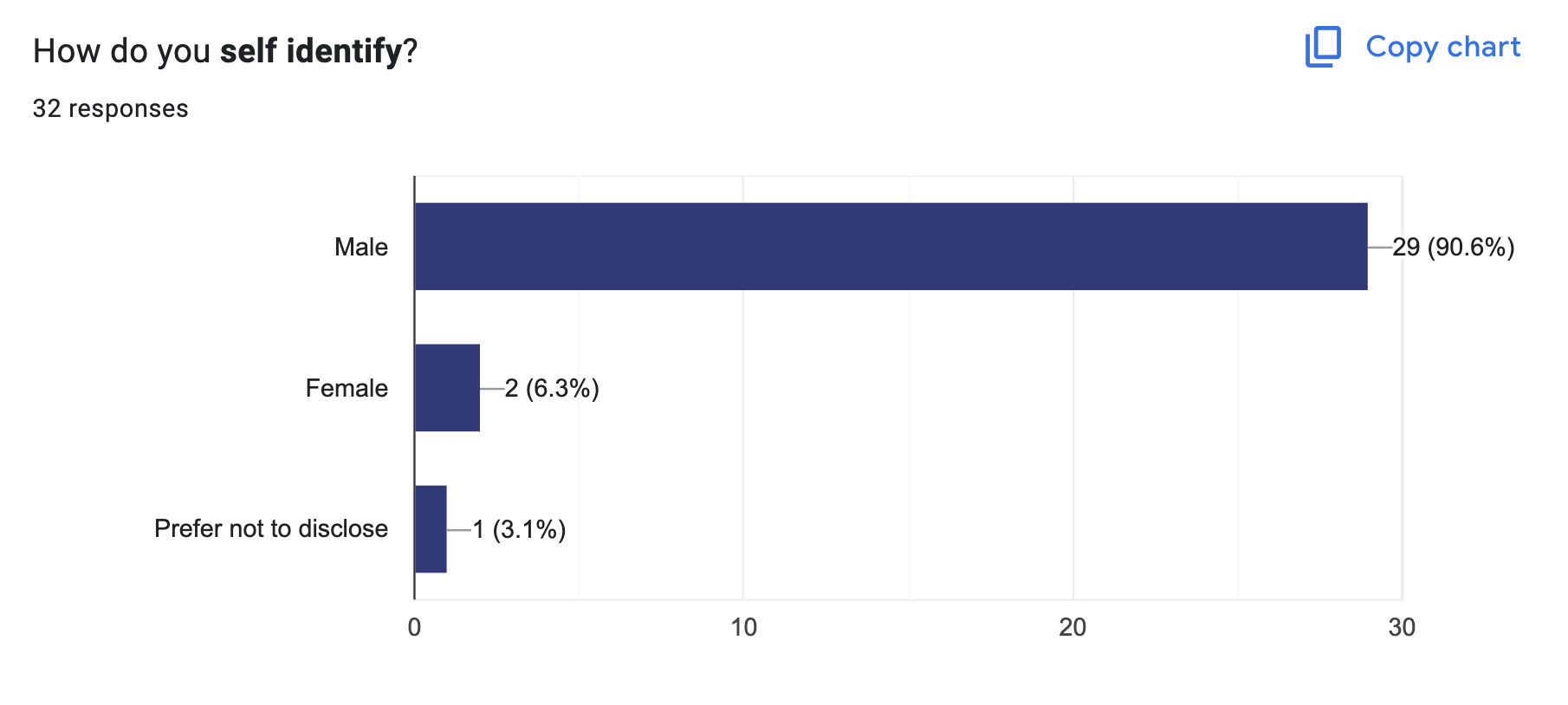
We are starting to capture some insightful perspectives on the state of production MLOps in 2025!! We have also started receiving further diverse perspectives but we'll need your support to continue collecting diverse perspectives to map the ecosystem! Please support us with your response, as well as by sharing with your colleagues 🚀🚀🚀 If you have a few minutes, your contribution will make a significant difference to the whole production ML ecosystem 🥳 The results will be shared as open source like last year!! You can add your response directly at: https://bit.ly/state-of-ml-2025 🔥
Hierarchical Reasoning Models
You may notice that sometimes ChatGPT takes too long to "Think" - reasoning is now becoming a critical lever to drive competitive differentiation in GenAI products, and a group of singapore researchers have been able to crack the code: Hierarchical Reasoning Model is a (pretty interesting) brain-inspired (thinking-fast-thinking-slow style) recurrent architecture designed to overcome the brittleness and inefficiency of chain-of-thought methods in large language models. This method implements a slow high-level module for abstract planning with a fast low-level module for detailed computation which enables deep latent reasoning within a single forward pass. This is not only an interesting approach due to the breakthroughs in performance but also from the implementation that resembles the thinking-fast thinking-slow approach which has been referenced in brain interactions; it will be interesting to see if some of these methodologies do provide a breakthrough in the space on performance (across efficiency and accuracy).
QWEN3 Towards Efficiency
Chinese giant Alibaba releases Qwen3-Next, which introduces a new large language model architecture designed for extreme efficiency in both training and inference: This new model is quite interesting as it combines a hybrid attention mechanism with an ultra-sparse MoE structure. The base model outperforms dense Qwen3-32B while consuming less than 10% of its training compute and delivering over 10× higher inference throughput on long contexts. It's great to see open models continue to improve at lightning speed, this model is available in Hugging Face, ModelScope, Alibaba Cloud (of course...), NVIDIA API Catalog, and is supported in frameworks like Transformers, SGLang, and vLLM.
Multi-Agents for CVE Exploits
Security vs GenAI: This paper shows how security researchers can how use GenAI to automate runs of security exploits at scale, raising further questions on the cat-mouse security race. This paper introduces a system called CVE-GENIE, which is an automated LLM-based multi-agent framework that reproduces CVEs end-to-end, generating both exploits and verifiers to build reproducible vulnerability datasets at scale. It is quite interesting as prior efforts rely on manual reproduction or narrow bug classes, however in this implementation the system has a systematic framework to enable the plans and execution through four coordinated modules: Processor, Builder, Exploiter, and Verifier. It is evaluated on 841 CVEs from 2024–2025, and it successfully reproduced 428 (51%) across 267 projects, 141 CWE categories, and 22 languages, at an average cost of $2.77 per CVE (which is quite a promising and impresive result). This does raise important questions on the future of security given how easy it is becoming to test common exploits across any system out there.
Simon Willison Vibe Code Apps
It is fascinating to see how AI-assisted rapid prototyping is completely changing how devs build everyday products - and as always Simon Willison has a great resource for just this: This is a great list of "vibe coding" projects that have been developed from scratch and have evolved into practical tools that one can rely on daily. This is a great list for anyone to try out and get started, consisting on projects from in-browser OCR for PDFs, annotated presentation generators, and image utilities, to LLM pricing calculators, and real-time feed monitors. If there is a suggestion from this it would be to try out some of these and take some of these AI projects for a run to accelerate some of these prototyping capabilities.
Upcoming MLOps Events
The MLOps ecosystem continues to grow at break-neck speeds, making it ever harder for us as practitioners to stay up to date with relevant developments. A fantsatic way to keep on-top of relevant resources is through the great community and events that the MLOps and Production ML ecosystem offers. This is the reason why we have started curating a list of upcoming events in the space, which are outlined below.
You can also find our upcoming events and past talk recordings on the talks and events page.
Upcoming conferences where we're speaking:
- WeAreDevelopers 2025 - 9th July @ Berlin
- SRE Con EMEA 2025 - 7th Oct @ Dublin
- World Summit AI Europe - 08 Oct @ Amsterdam
- Code.Talks 2025 - 5th Nov @ Hamburg
Other upcoming MLOps conferences in 2025:
- ODSC East - May 13 @ Boston
- Data & AI Summit - 9th June @ San Francisco
- AI Summit London - 12th June @ UK
- MLOps World - Oct 8-9 @ Austin
In case you missed our talks:
- The State of AI in 2025 - WeAreDevelopers 2025
- Prod Generative AI in 2024 - KubeCon AI Day 2025
- The State of AI in 2024 - WeAreDevelopers 2024
- Responsible AI Workshop Keynote - NeurIPS 2021
- Practical Guide to ML Explainability - PyCon London
- ML Monitoring: Outliers, Drift, XAI - PyCon Keynote
- Metadata for E2E MLOps - Kubecon NA 2022
- ML Performance Evaluation at Scale - KubeCon Eur 2021
- Industry Strength LLMs - PyData Global 2022
- ML Security Workshop Keynote - NeurIPS 2022
Open Source MLOps Tools
Check out the fast-growing ecosystem of production ML tools & frameworks at the github repository which has reached over 10,000 ⭐ github stars. We are currently looking for more libraries to add - if you know of any that are not listed, please let us know or feel free to add a PR. Four featured libraries in the GPU acceleration space are outlined below.
- Kompute - Blazing fast, lightweight and mobile phone-enabled GPU compute framework optimized for advanced data processing usecases.
- CuPy - An implementation of NumPy-compatible multi-dimensional array on CUDA. CuPy consists of the core multi-dimensional array class, cupy.ndarray, and many functions on it.
- Jax - Composable transformations of Python+NumPy programs: differentiate, vectorize, JIT to GPU/TPU, and more
- CuDF - Built based on the Apache Arrow columnar memory format, cuDF is a GPU DataFrame library for loading, joining, aggregating, filtering, and otherwise manipulating data.
If you know of any open source and open community events that are not listed do give us a heads up so we can add them!
OSS: Policy & Guidelines
As AI systems become more prevalent in society, we face bigger and tougher societal challenges. We have seen a large number of resources that aim to takle these challenges in the form of AI Guidelines, Principles, Ethics Frameworks, etc, however there are so many resources it is hard to navigate. Because of this we started an Open Source initiative that aims to map the ecosystem to make it simpler to navigate. You can find multiple principles in the repo - some examples include the following:
- MLSecOps Top 10 Vulnerabilities - This is an initiative that aims to further the field of machine learning security by identifying the top 10 most common vulnerabiliites in the machine learning lifecycle as well as best practices.
- AI & Machine Learning 8 principles for Responsible ML - The Institute for Ethical AI & Machine Learning has put together 8 principles for responsible machine learning that are to be adopted by individuals and delivery teams designing, building and operating machine learning systems.
- An Evaluation of Guidelines - The Ethics of Ethics; A research paper that analyses multiple Ethics principles.
- ACM's Code of Ethics and Professional Conduct - This is the code of ethics that has been put together in 1992 by the Association for Computer Machinery and updated in 2018.
If you know of any guidelines that are not in the "Awesome AI Guidelines" list, please do give us a heads up or feel free to add a pull request!
About us
The Institute for Ethical AI & Machine Learning is a European research centre that carries out world-class research into responsible machine learning.